What does a healthcare marketing agency in Dubai do?
A healthcare marketing agency in Dubai helps clinics, hospitals and specialists attract and book patients while respecting medical advertising rules. That means doctor and service pages built on verified credentials, clinician-reviewed content, Google Maps and search visibility, compliant ads, review management that protects patient privacy, and booking paths through calls, forms and WhatsApp.
Why healthcare marketing is judged more strictly
The whole job in healthcare is to be easy to trust and easy to book, and both are harder than they sound. Health pages sit in the category Google calls “Your Money or Your Life”, where it looks hardest for real expertise, accuracy and accountability. Patients behave the same way: they check who the doctor is, what the clinic is licensed to do and what other patients say before they call.
That standard shapes everything a healthcare marketing agency in Dubai should do. We would rather publish a few dozen accurate pages than hundreds of thin ones, name the clinician behind each claim, and give every page an owner who can say when it was last checked. Careful work also tends to hold up better when search algorithms change.
How patients find and choose a doctor
Patients rarely search for a clinic first. They search for a problem, a specialty or a person, and the practice that answers best gets the booking.
| What the patient needs | What they type | What should answer it |
|---|---|---|
| To understand a symptom or condition | “knee pain treatment”, “acne clinic” | A clinician-reviewed condition and treatment page |
| A specialist nearby | “dermatologist in Jumeirah” | A specialty page and a Google Business Profile for that branch |
| A particular kind of doctor | A doctor’s name, or “Arabic-speaking paediatrician” | A doctor profile with credentials and languages |
| Confirmation of cover | “clinic accepting” plus an insurer’s name | An insurance page that is kept current |
| Urgent care | “walk-in clinic open now” | Hours, directions and click-to-call on every page |
In a city where patients speak many languages, the languages a doctor speaks can matter as much as the specialty. Say so on the profile, and keep it accurate. Pages in Arabic and English need planning, not machine translation: see our guide to Arabic and English SEO for UAE websites.
Would this work for your business? Send us your website and we will tell you what to fix first, free and within one business day.
Get a free auditHealth advertising rules: ask before you publish
Medical advertising in the UAE is regulated by the authority that licenses you: the Dubai Health Authority (DHA) in Dubai, the Department of Health (DOH) in Abu Dhabi, and the Ministry of Health and Prevention (MOHAP) for the northern emirates. Approval steps and permitted content differ between them and change over time, so never assume an ad that cleared one authority is fine under another.
Settle these with your authority before a campaign
- Does this ad or page format need pre-approval, and who submits it?
- Which claims are restricted: superlatives, comparisons, outcomes, testimonials, before-and-after images?
- How may doctors be named, and how must credentials be shown?
- Are price promotions or free-consultation offers allowed for this service?
- What must appear on the ad or page, such as licence details or disclaimers?
- How do Google and Meta health policies limit targeting and remarketing?
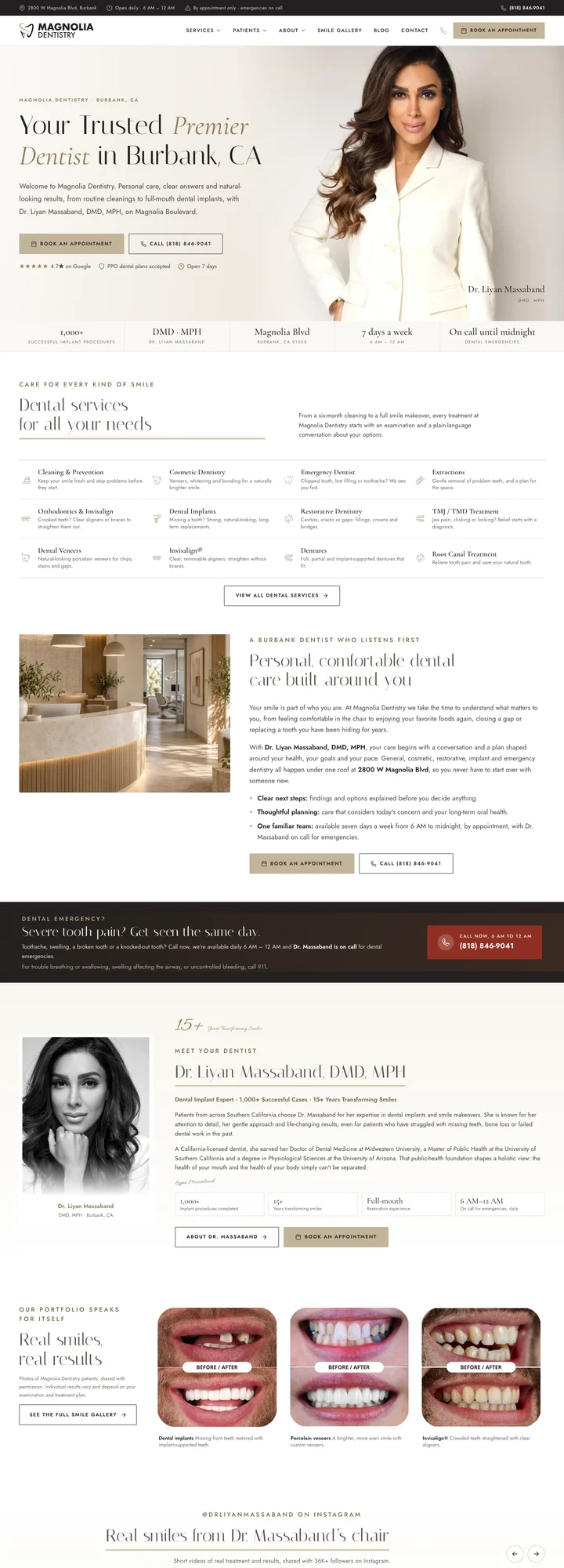
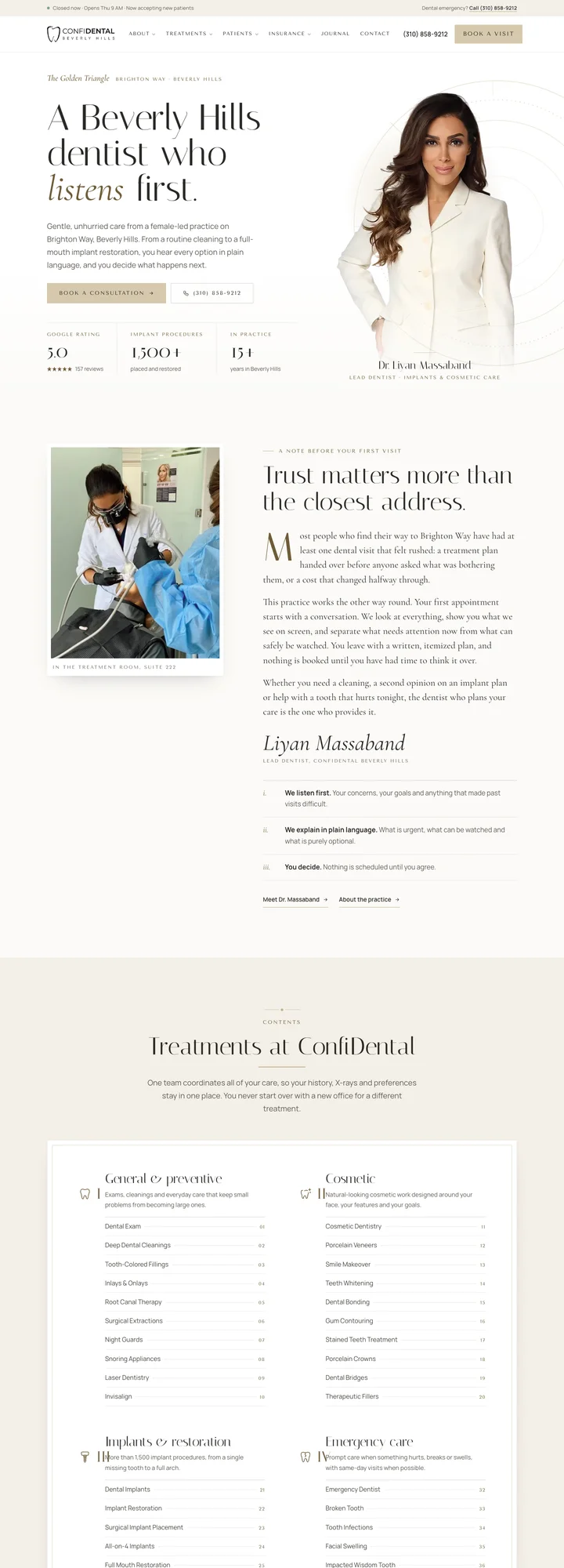
Doctor and service pages: where trust is built
Each doctor needs their own page, because patients choose people as much as clinics. This is the minimum we build:
- A real photo, name and specialty, with credentials and licence details exactly as issued
- Languages spoken, branches, working days and how to book
- Services and conditions treated, linked to their own pages
- Insurance networks accepted, kept current
- Physician or MedicalClinic structured data so search engines can read the details
Condition and treatment pages need a clinician’s review. Name the reviewer, show the review date, and mark both in structured data. If nobody owns a page, nobody notices when it goes out of date, and outdated medical information costs trust fast. This is the core of our content development and on-page SEO work for clinics.
Scale changes the structure. A multi-specialty hospital needs a page for each service line, a named clinical owner for each page and booking by department. A single-specialty practice usually does better with fewer, deeper pages and one very clear booking path.
Insurance searches and the path to an appointment
Many patients ask “do you take my insurance?” before they ask anything else. List the networks you accept per clinic and per doctor, update the list when contracts change, and remove anything you cannot honour. A wrong claim costs more than a missing one.
Then audit the path from search to a confirmed slot. This is the sequence we check:
- The page loads fast on a phone
- A call, WhatsApp or booking button is visible without scrolling
- The form asks only for name, number, specialty, preferred time and insurer
- A person or system confirms the slot the same day, in the patient’s language
- A reminder goes out before the visit
Use WhatsApp to book and confirm, not to discuss symptoms. Keep clinical detail out of chat, set an out-of-hours auto-reply, and use the clinic’s business account rather than a staff member’s personal phone.
Measure what happens next without exposing patients. Track calls, forms and WhatsApp clicks by source, then pass only anonymous outcomes, such as “appointment booked”, back to the ad platforms. Patient names, numbers and conditions stay in your own system.
Prefer to talk it through? Message or call us and a person replies within one business day.
WhatsApp us +971 52 659 6950Reviews and patient privacy
Reviews drive both local search visibility and the decision to book. They are also where clinics most often slip. A public reply that thanks someone for their knee surgery has just confirmed they are a patient and revealed what they were treated for.
- Reply to every review, in the language it was written in
- Thank the reviewer without confirming they were a patient or naming a treatment
- Invite them to contact the clinic directly to talk about their experience
- Never offer discounts or gifts for reviews, and never ask only happy patients
- Get written consent before using patient photos or testimonials, and check your authority’s rules first
Handle personal data under the UAE Personal Data Protection Law (PDPL) and any health-data rules your authority applies. That covers lead forms, WhatsApp threads and remarketing audiences. Google and Meta both restrict how health conditions can be used for targeting, so check current platform policy before building audiences from visits to condition pages.
The order of work, and the mistakes we fix first
For most clinics we start with the Google Business Profile and doctor pages, make booking effortless, then add paid search for services where demand already exists, and only then invest in educational social content. Our guide to ranking a medical clinic website covers the first step in detail, and Google Ads comes after it.
Mistakes we usually find
- One generic “Services” page instead of a page per specialty and doctor
- Health claims written by a copywriter and never reviewed by a clinician
- Before-and-after images or testimonials published without consent or approval
- Insurance lists last updated when a contract was signed
- Public review replies that reveal treatment details
- Remarketing lists built from visitors to condition pages
- Phone-only booking with no out-of-hours option
If several of these sound familiar, start with the free audit. It shows what to fix before more budget goes in.